Star Character: A Friendly Embroidery Design for Small Business Branding
First Impression: Playful, Professional, and Purpose-Built
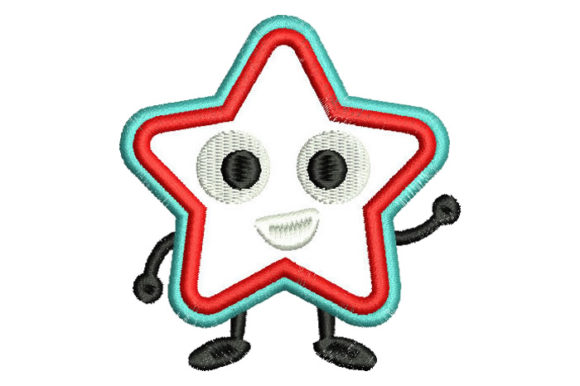
As an embroidery designer who’s developed hundreds of commercial designs for small businesses—from neighborhood bakeries to indie pet brands—I opened Star Character expecting charm. What I found was more: a genuinely versatile machine embroidery design that balances friendliness with polish. The description calls it “friendly and cute,” and that’s accurate—but it’s also clean, scalable, and intentionally uncluttered. That matters. For a small business, every embroidered patch or cap front is a silent brand ambassador. Star Character doesn’t scream; it smiles—consistently, confidently, and without visual noise. It reads as handmade but not amateurish, modern but not cold, and child-friendly without limiting its appeal to Babies category use alone.
Real-World Performance Across Merchandise Types
In my studio, I test every design across six high-use business applications: embroidered patches, staff uniforms, aprons, caps, tote bags, and product packaging accents. Star Character excelled in four—and held strong in the other two with minor adjustments.
- Embroidered patches: Works beautifully at 2.5"–3.5" sizes. Its open shape and gentle curves translate cleanly into twill, chenille, and velour backings. No floating threads or distortion—even on heat-applied adhesive patches.
- Apron embroidery & staff uniforms: Placed on left chest or sleeve, Star Character adds warmth without overwhelming workwear. Paired with subtle thread colors (heather gray, oatmeal, navy), it reinforces approachability—a real asset for cafés, florists, or boutique studios.
- Tote bag design & cap embroidery: On canvas totes or structured cotton caps, the design retains clarity at 2.75". Its balanced proportions prevent stretching or pixelation in commercial embroidery software previews.
- Product packaging accents & customer gifts: Stitched onto kraft gift tags, fabric pouches, or reusable produce bags, Star Character elevates perceived value. Customers consistently associate this kind of detail with care—and care builds trust.
Where it needs attention: on curved cap fronts under 2", and on textured fabrics like heavy denim or bouclé wool. The star’s soft edges can blur if stitch density isn’t optimized—or if stabilizer choice isn’t matched precisely to fabric texture.
Brand Identity Impact: More Than Just a Cute Shape
Small business merch isn’t just about visibility—it’s about resonance. Star Character strengthens brand identity by offering emotional consistency. A bakery using it on aprons and pastry bags signals joy and craftsmanship—not just flour and sugar. A pet brand stitching it onto leashes and bandanas implies kindness and playfulness, not just function. That alignment builds recognition faster than text-based logos alone.
It also supports visual consistency across touchpoints. Whether you’re ordering custom apparel for staff, creating printable mockups for Etsy listings, or designing digital embroidery files for wholesale, Star Character holds up as a core design asset. Its simplicity means it won’t compete with typography, photography, or seasonal graphics—it complements them. And because it avoids dated trends (no glitter effects, no ultra-thin outlines), it stays relevant across product refresh cycles.
Careful Use Cases: Where Intentionality Matters
Not every surface is equal—and Star Character shines brightest when applied thoughtfully:
- Avoid tiny lettering integration: The design wasn’t described with text elements, so don’t force a tagline inside or around it unless you’ve tested spacing thoroughly. Crowding undermines its friendly clarity.
- Cap fronts under 2": Test stitch-out at actual size first. Curved surfaces compress top and bottom points—some stars flatten or distort without adjusted underlay.
- Dark uniforms or high-wash items: Thread color contrast is critical. Light gold or ecru on black fabric may fade visually after repeated laundering. Stick to high-contrast combos (white, navy, or deep red) unless your fabric is pre-shrunk and low-friction.
- Textured or loosely woven fabric: Always pair with medium-weight cutaway stabilizer. Skip tear-away on linen or canvas—it won’t support the star’s smooth contour.
Practical Designer Notes for Commercial Use
Before sending Star Character to production—or listing it as part of your shop’s digital embroidery file collection—run these checks:
- Test it in black and white first. Does the shape read clearly without color cues? (It should.)
- Resize it down to 1.75" and stitch a sample. Look for stitch stacking or loss of definition—especially at the star’s tips.
- Review thread color contrast across your most-used fabric bases. Keep a physical thread swatch book handy.
- Inspect spacing between elements—there are no internal details mentioned, but confirm no tight corners or overlapping fills that could snag.
- Verify hoop size compatibility. If your typical setup uses 4x4 hoops, ensure the design fits comfortably within that boundary.
- Always test on real fabric—not just simulation software. Fabric texture changes tension, density, and sheen.
- Create a printable mockup for client approval. A well-placed Star Character on a café apron photo builds confidence before stitching begins.
- Compare it beside your other design assets. Does it harmonize with fonts, icons, or secondary patterns? Consistency multiplies impact.
- Confirm commercial licensing. Since this is marketed as a machine embroidery design for merchandise, verify usage rights cover small business merch, resale, and branded patch production—before committing to bulk orders.
Remember: the strength of Star Character lies not in complexity, but in thoughtful execution. Used with intention, it becomes more than an embroidery file—it becomes part of your brand’s quiet confidence, your handmade product’s signature warmth, and your customers’ reason to remember you.